Why Your Pollinator Garden Needs Native Plants
The Hidden Costs of Conventional Landscaping
Many gardeners face the frustration of creating beautiful spaces that lack ecological function. Common issues include:
- Hybridized flowers that produce little to no nectar or pollen
- Increased dependency on water, fertilizers, and pesticides
- Missing host plants essential for caterpillar development
- Creating “green deserts” that look attractive but support minimal wildlife
The Rewards of Going Native
Transitioning to native plants brings immediate and long-term benefits:
- Significantly reduced maintenance requirements
- Natural pest and disease resistance
- Continuous wildlife activity and biodiversity
- Deep satisfaction from contributing to local ecosystem health
Essential Native Plants for Your Pollinator Garden
Milkweed (Asclepias species)
Ecological Role: Exclusive host plant for Monarch butterfly caterpillars
Pollinators Attracted: Monarch butterflies, various bee species, other butterflies
Gardening Tip: Plant multiple milkweed species to support Monarchs throughout their entire breeding cycle
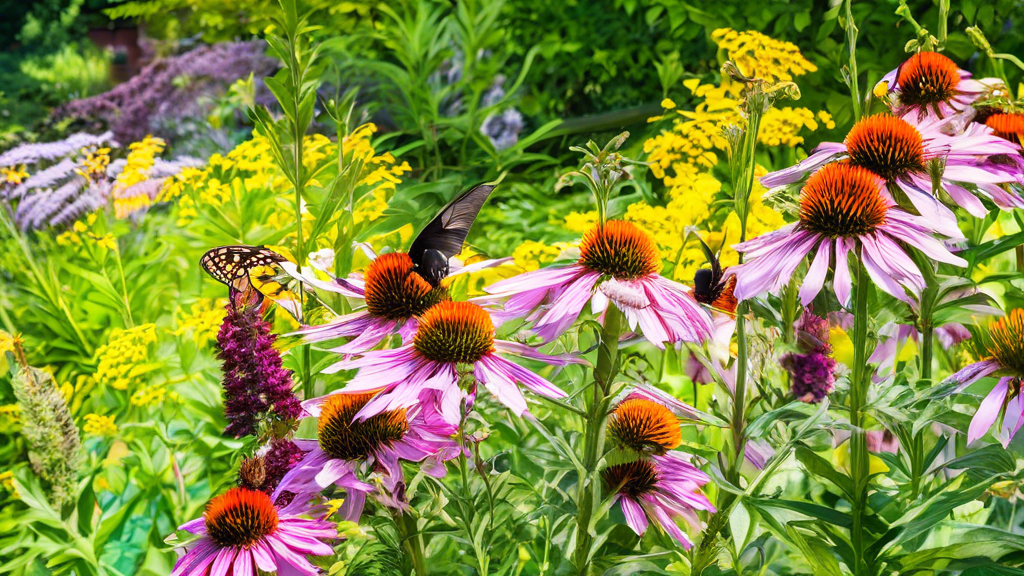
Purple Coneflower (Echinacea purpurea)
Ecological Role: Reliable nectar source with extended blooming period
Pollinators Attracted: Bees, butterflies, and seed-eating birds in fall
Gardening Tip: Leave dried seed heads through winter as natural bird feeders
Bee Balm (Monarda fistulosa)
Ecological Role: Powerful attractant for hummingbirds and diverse bee species
Pollinators Attracted: Hummingbirds, bumblebees, honeybees
Gardening Tip: Wild varieties offer better resistance to powdery mildew than cultivated hybrids
Goldenrod (Solidago species)
Ecological Role: Critical late-season nectar source when other flowers fade
Pollinators Attracted: Native bees, beetles, migrating butterflies
Unique Insight: Goldenrod is often mistaken for causing hay fever, but the real culprit is ragweed. Goldenrod pollen is heavy and sticky, requiring insect transport, while ragweed releases lightweight wind-borne pollen.
Blazing Star (Liatris spicata)
Ecological Role: Unique flowering structure that blooms top-down
Pollinators Attracted: Large butterflies including Swallowtails and Monarchs
Gardening Tip: The flower spikes provide perfect landing platforms for larger butterfly species
Native vs. Non-Native: Understanding the Ecological Impact
| Factor | Native Plants | Non-Native Plants |
|---|---|---|
| Nutritional Value | Co-evolved with local pollinators, providing optimal nutrition | Often less nutritious or inaccessible to native pollinators |
| Lifecycle Support | Supports complete insect lifecycles (host plants + nectar) | Typically only provides nectar for adult insects |
| Maintenance Needs | Adapted to local conditions, requiring minimal intervention | Often need supplemental water, fertilizer, and pest control |
| Ecological Integration | Supports complex food webs and biodiversity | May become invasive or disrupt local ecosystems |
Designing Your Garden for Maximum Impact
Strategic Planting Techniques
Create pollinator-friendly zones using these proven methods:
- Cluster Planting: Group 3-5 of the same plant species together to create visible targets for pollinators
- Succession Blooming: Select plants that flower in sequence from early spring through late fall
- Layered Habitat: Incorporate plants of varying heights to create microhabitats
Beyond Plants: Supporting Pollinator Needs
Pollinators require more than just flowers:
- Provide shallow water sources with landing stones
- Leave bare ground areas for ground-nesting bees
- Maintain leaf litter and dead wood for overwintering insects
- Avoid pesticide use, especially during flowering periods
Frequently Asked Questions
Can I create a pollinator garden in a small space or container?
Absolutely! Even a single container with native plants like compact coneflowers or bee balm can serve as a valuable resource for urban pollinators. Focus on plants with high nectar production relative to their size.
Where should I source my native plants?
Seek out local native plant nurseries or conservation organization sales. Avoid large retailers that may treat plants with systemic neonicotinoid pesticides, which can remain in the plant and harm pollinators for years.
Will a native plant garden look unkempt or wild?
Native gardens can be designed with aesthetic appeal while maintaining ecological function. Many gardeners create structured designs using native plants, and the winter interest provided by seed heads and grasses adds seasonal beauty.
How quickly will pollinators find my new garden?
You may notice some pollinator activity within the first season, but the ecosystem typically matures over 2-3 years. As plants establish and word spreads through pollinator networks, your garden will become increasingly active.
What’s one thing most people don’t know about pollinator gardening?
Many native plants have specialized features invisible to human eyes. For example, some milkweed species have microscopic hairs on their stems that help small bees and other insects climb and navigate—a feature often missing in non-native alternatives that makes a significant difference to tiny pollinators.