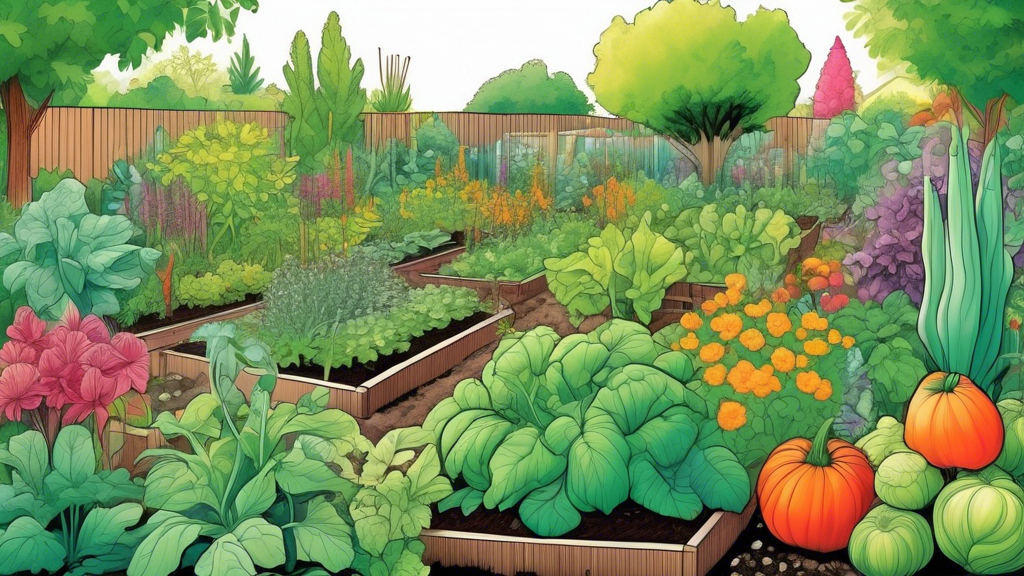
Why Your Garden Needs Companion Planting: Solving Common Challenges
The Frustration of Pests Without Pesticides
Watching bugs decimate your hard work is disheartening, especially when you want to avoid harsh chemicals. Companion planting offers a natural solution. For instance, planting basil near tomatoes can repel tomato hornworms and flies, creating a protective barrier without a single spray.
The Struggle for Space in Small Gardens
Limited room shouldn’t limit your harvest. Companion planting maximizes every inch. The classic “Three Sisters” method—combining corn, beans, and squash—uses vertical space and ground cover to boost yield efficiently, making small plots remarkably productive.
Poor Soil and Weak Plants
Stunted, yellowing plants often signal soil issues. Legumes like beans and peas are powerful allies, fixing nitrogen in the soil to nourish neighboring plants. This natural fertilization strengthens your garden’s foundation, leading to healthier growth.
Top Tier Combinations: The Best Companion Planting Pairings
The Tomato’s Best Friends
Tomatoes thrive with specific partners. Basil deters hornworms, marigolds ward off nematodes, and onions keep various pests at bay. Carrots can also be interplanted to loosen soil, benefiting tomato roots.
The Cucumber & Squash Support System
Cucumbers and squash benefit from strategic allies. Radishes repel cucumber beetles, nasturtiums lure aphids away as a trap crop, and corn can serve as a natural trellis for vining varieties, saving space and support.
The Cabbage Family Protectors
Plants like cabbage, broccoli, and kale are prone to pests. Aromatic herbs such as dill, sage, and rosemary confuse and repel cabbage moths and flea beetles. Nasturtiums also act as a sacrificial crop, drawing pests from your brassicas.
The “Three Sisters”: The Original Power Trio
This ancient Native American method combines corn, pole beans, and squash. Corn provides structure for beans to climb, beans fix nitrogen to feed the corn, and squash leaves shade the soil, suppressing weeds and retaining moisture—a perfect symbiotic trio.
| Vegetable | Best Companions | Key Benefits |
|---|---|---|
| Tomatoes | Basil, Marigolds, Onions | Pest repellent, improved flavor |
| Cucumbers | Radishes, Nasturtiums, Corn | Pest control, natural trellising |
| Cabbage | Dill, Sage, Nasturtiums | Confuses pests, trap cropping |
| Beans | Corn, Squash, Carrots | Nitrogen fixation, space efficiency |
Companion Planting vs. Competitor Planting: What to Avoid
The Tomato and Potato Rivalry
Tomatoes and potatoes should be kept apart. Both are susceptible to the same blight, and planting them together can accelerate the spread of disease, risking your entire crop.
Beans and Onions: A Clash of Personalities
Alliums like onions, garlic, and leeks can inhibit the growth of beans and peas. Their antibacterial properties disrupt the nitrogen-fixing bacteria essential for legumes, stunting development.
Dill and Carrots: A Family Feud
As members of the same family, dill and carrots can cross-pollinate, leading to inferior-tasting carrots. Dill may also attract carrot pests, compounding the problem.
| Vegetable | Plants to Avoid | Reason |
|---|---|---|
| Tomatoes | Potatoes, Fennel | Shared diseases, growth inhibition |
| Beans | Onions, Garlic, Leeks | Stunted growth from antibacterial effects |
| Carrots | Dill, Parsnip | Cross-pollination, pest attraction |
Beyond Pest Control: A Unique Benefit You Might Not Know
The Flavor Enhancers: How Companions Can Actually Improve Taste
While pest control gets most of the attention, certain plant pairings can subtly enhance flavor—a little-known perk of companion planting. Basil grown near tomatoes is reputed to intensify the tomatoes’ sweetness. Chamomile, often called the “plant physician,” may improve the flavor of cabbage and onions through aromatic interactions. Similarly, borage planted near strawberries is believed to make the berries taste sweeter, adding a delicious twist to your harvest.
Frequently Asked Questions (FAQs) About Companion Planting
Is companion planting scientifically proven?
Many combinations are supported by strong anecdotal evidence and observable results, with scientific backing for underlying principles like pest confusion and nitrogen fixation. However, not every pairing has been rigorously tested, so some remain part of gardening tradition.
Can I practice companion planting in containers?
Yes! The same principles apply to container gardening. Ensure your pot is large enough to accommodate the root systems of all plants, and group compatible varieties to reap the benefits even in limited spaces.
How close do companion plants need to be?
For optimal effect, place them within a few feet of each other. Interplant aromatic companions directly among your vegetables rather than in separate rows to maximize pest-repelling scents and mutual benefits.
What is a good “universal” companion plant?
Marigolds and nasturtiums are excellent universal companions. They repel a broad spectrum of pests, attract beneficial pollinators, and are easy to grow, making them versatile additions to any garden bed.