Why Your Garden’s Success Starts with the Soil
Common Issues Caused by Unhealthy Soil
- Stunted plant growth and lackluster yields.
- Plants that are more susceptible to pests and diseases.
- Poor drainage leading to waterlogged roots or soil that dries out too quickly.
- Yellowing leaves (chlorosis) indicating nutrient deficiencies.
- Constant struggle despite regular watering and feeding.
The Three Pillars of Healthy Soil
- Structure & Texture: The physical arrangement of soil particles (sand, silt, clay).
- Nutrient Content: The availability of essential macro and micronutrients.
- Biology: The living ecosystem of bacteria, fungi, earthworms, and other organisms.
How to Test Your Garden Soil: A Step-by-Step Diagnosis
The Simple Jar Test for Soil Texture
A DIY method to determine if your soil is clay, silt, sand, or loam. Why texture matters for water retention and root development.
The Percolation Test for Drainage
How to check if your soil drains too quickly or too slowly. Relating this test back to the common issue of water problems.
Professional Soil Test vs. DIY Kits: A Clear Comparison
| Method | Pros | Cons |
|---|---|---|
| DIY Kits | Quick, inexpensive | Less accurate, limited data |
| Lab Test (University/Private) | Highly accurate, detailed nutrient & pH analysis, specific recommendations | Cost, time |
Recommendation: For serious gardeners, a lab test is the best starting point.
The Unique “Earthworm Count” Test
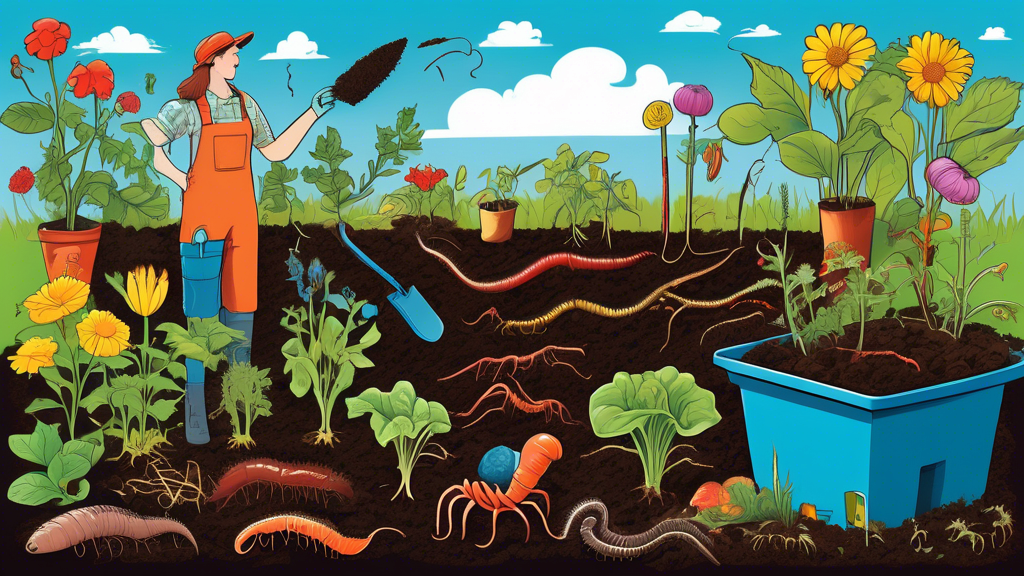
A healthy soil ecosystem is one of the best indicators of long-term soil health, and earthworms are its star engineers. Many gardeners focus solely on chemistry, overlooking this vital biological component.
How to do it: Dig a one-foot square, six-inch deep section of soil and count the earthworms. 10 or more indicates excellent biological health; fewer than 3 means your soil life needs help.
How to Improve the Health of Your Garden Soil Based on Your Test Results
Amending Soil Structure and Drainage
- For Clay Soil: Incorporate gypsum and coarse organic matter (compost, wood chips).
- For Sandy Soil: Add compost and well-rotted manure to increase water retention.
Balancing Soil pH and Nutrients
- To Raise pH (Make Less Acidic): Apply garden lime.
- To Lower pH (Make More Acidic): Apply elemental sulfur or peat moss.
- Using organic fertilizers (bone meal, kelp meal) vs. synthetic based on your test results.
Boosting Your Soil’s Living Ecosystem
- The power of adding high-quality compost—it feeds the soil, not just the plants.
- Using cover crops (e.g., clover, buckwheat) to fix nitrogen and prevent erosion.
- Applying compost tea or mycorrhizal fungi inoculants to introduce beneficial microbes.
Maintaining Your Garden Soil Health Long-Term
The Golden Rule: Feed the Soil, Not Just the Plants
Sustainable Practices for Every Season
- Top-dressing with compost annually.
- Using mulch to regulate temperature and moisture.
- Practicing crop rotation to prevent nutrient depletion.
Frequently Asked Questions (FAQs) About Garden Soil Health
How often should I test my garden soil?
For a new garden, test it first. For established gardens, a test every 2-3 years is sufficient.
Can I use a home soil test kit from a big box store reliably?
They are a good starting point for pH and basic N-P-K, but for precise nutrient management, a lab test is superior.
What is the single best thing I can add to my garden soil?
Finished compost. It improves structure, adds nutrients, and supports biology all at once. Learning how to test and improve the health of your garden soil often leads back to this one powerful amendment.
Is it possible to have too much organic matter in my soil?
Yes, in rare cases. Excessive, unfinished organic matter can tie up nitrogen as it decomposes and, in very high amounts, affect water retention. Always use well-rotted compost.
Conclusion: Reiterate that understanding and nurturing your soil is a continuous journey, not a one-time task. By following these steps to test and amend your soil, you are investing in the long-term vitality and productivity of your entire garden. Encourage the reader to start with a simple test.